
The Otis team journey
From private reflection to a team agreement people can actually use.
Otis helps a team see how safe it feels to belong, speak freely, and innovate—then turns that insight into specific behaviours the team can practise together.
Screens are illustrative of the current beta and may evolve.
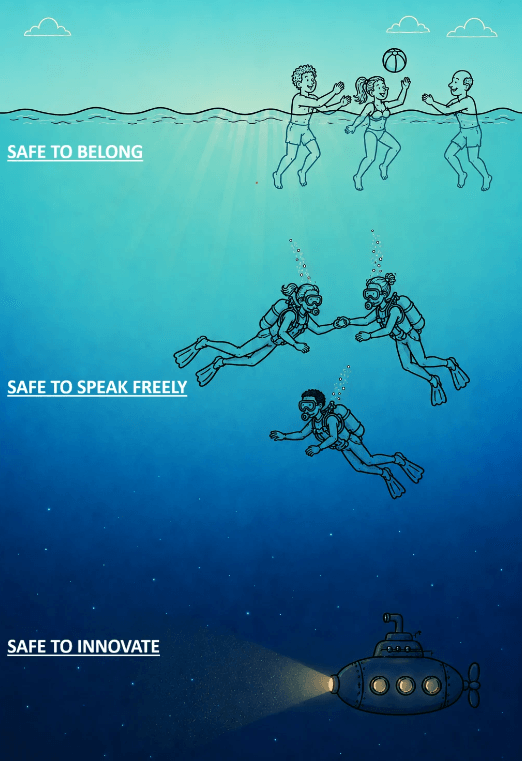
Each person reflects in their own space.
The team sees themes, never named answers.
Insight becomes an agreement and routine.
Set up and invite
Bring the team into one shared journey.
A consultant, manager, facilitator, or team lead creates the team, adds its members, and sends each person a private invitation.
 Open full size ↗
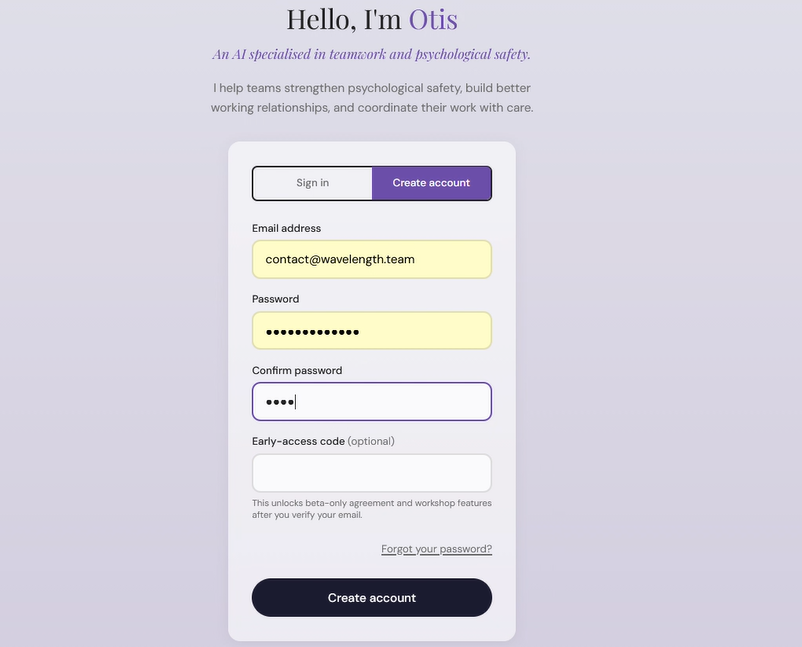
Create the account
The person guiding the process creates a Wavelength account and starts a team.
 Open full size ↗
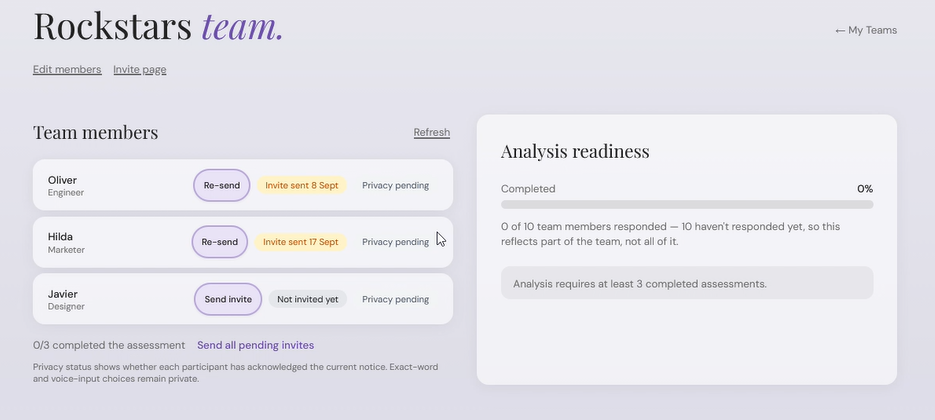
Add the team
A simple roster shows who has been invited and who has completed the assessment—without exposing anyone's answers.
 Open full size ↗
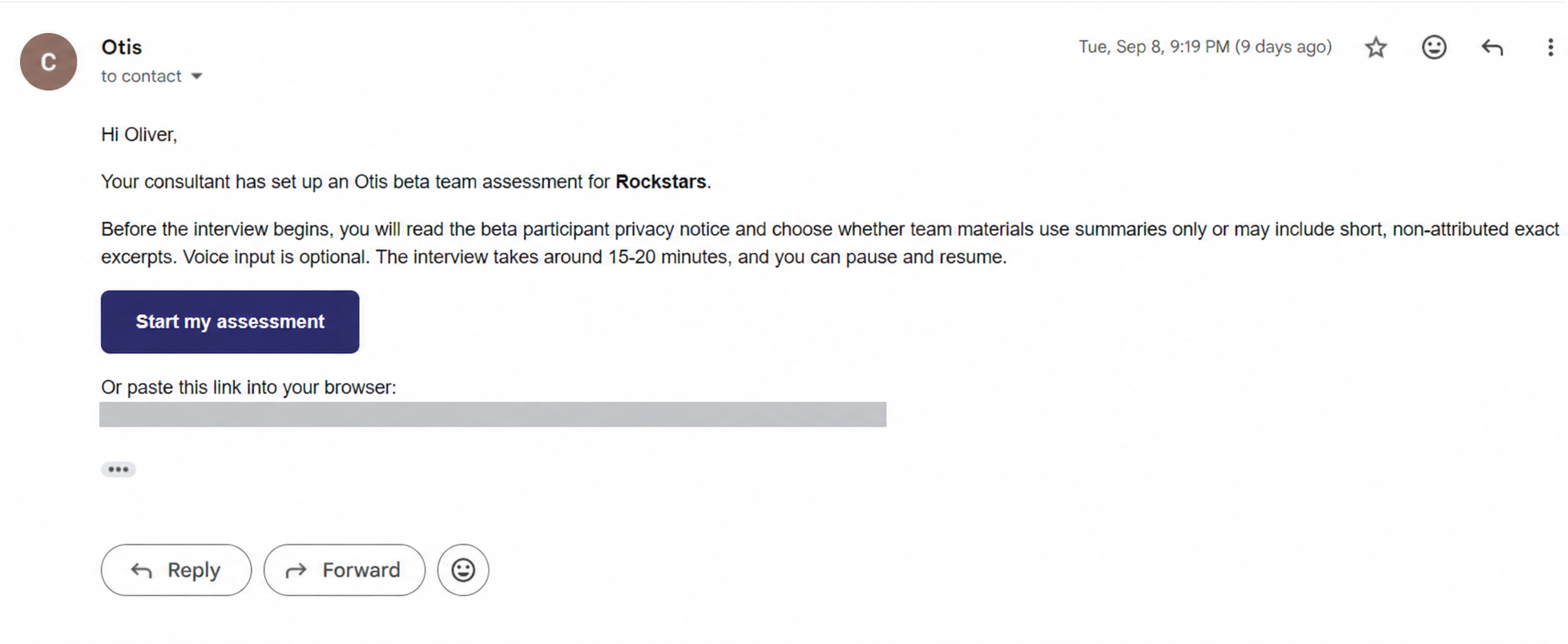
Receive a private link
Every member receives their own secure invitation. The example link shown here has been deliberately redacted.
 Open full size ↗
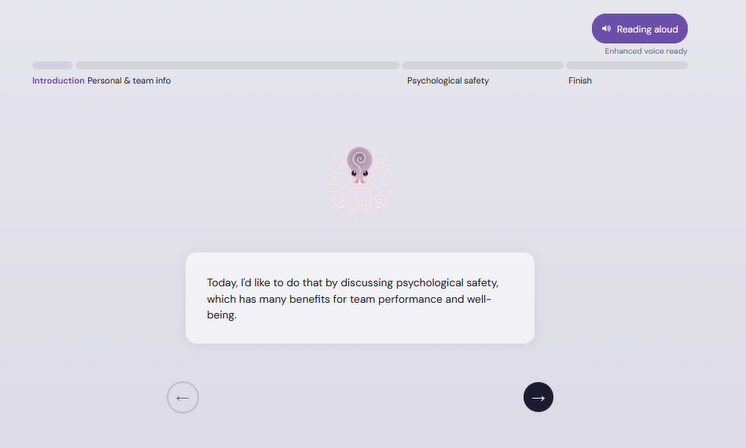
Meet Otis
Otis explains what the conversation will cover before the first question appears.
Individual assessment
Make space for honest answers.
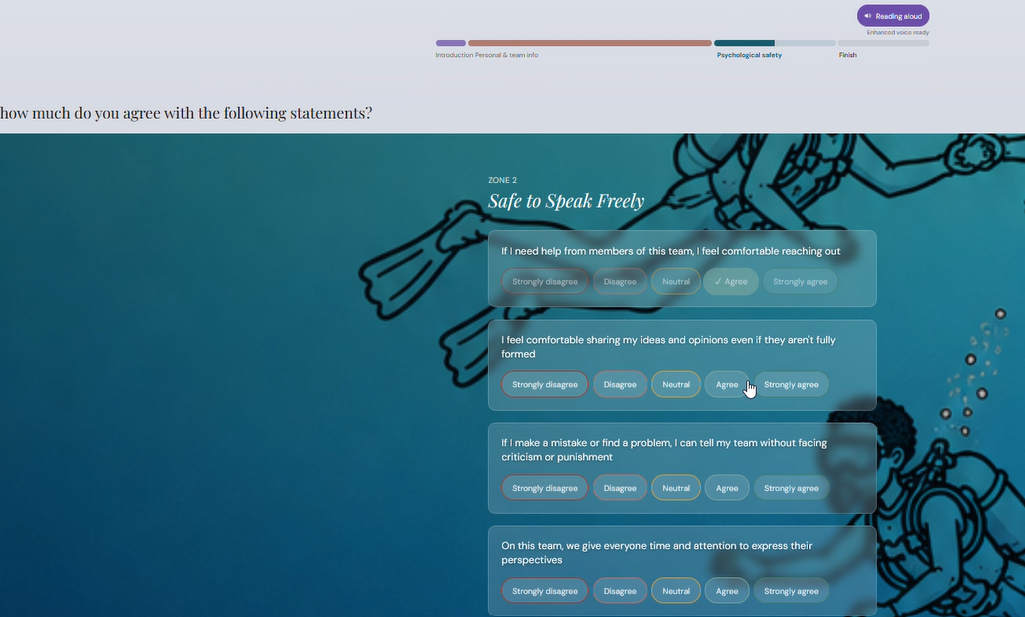
Each person completes a guided assessment about their role, the team’s purpose, how work happens, and three levels of psychological safety.
 Open full size ↗
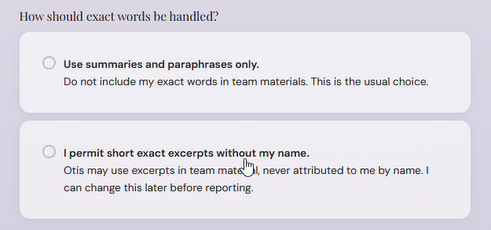
Choose how words may be used
Summaries are the default. A member can separately allow short, non-attributed exact excerpts—and can change that choice later.
 Open full size ↗
Respond individually
Members respond on their own, so the team picture is built from independent perspectives rather than a public group discussion.
Results and sense-checking
Turn many viewpoints into one team picture.
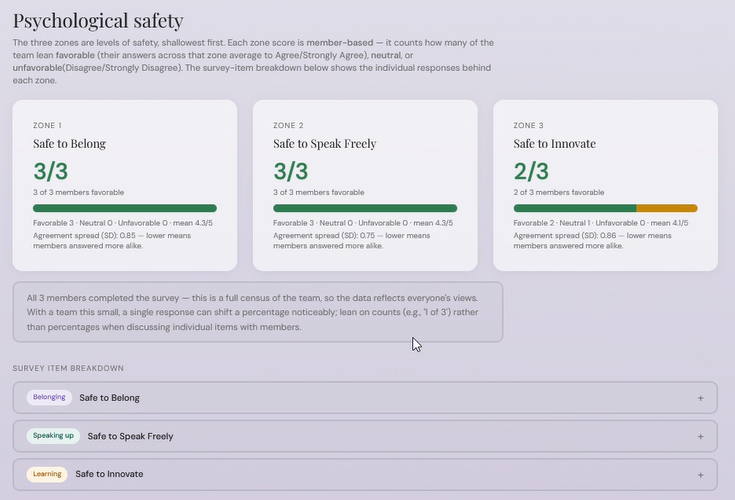
Otis looks across the team’s responses for agreement, differences, and patterns in shared purpose and psychological safety.
 Open full size ↗
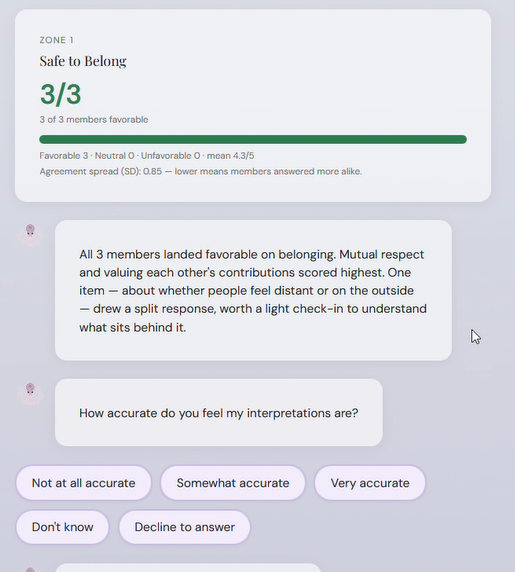
See the team-level pattern
The team report brings the three safety levels together without turning individual responses into a performance scorecard.
 Open full size ↗
Check Otis's interpretation
Each member sees the result and can say whether Otis has read the team accurately. The interpretation is a starting point, not a verdict.
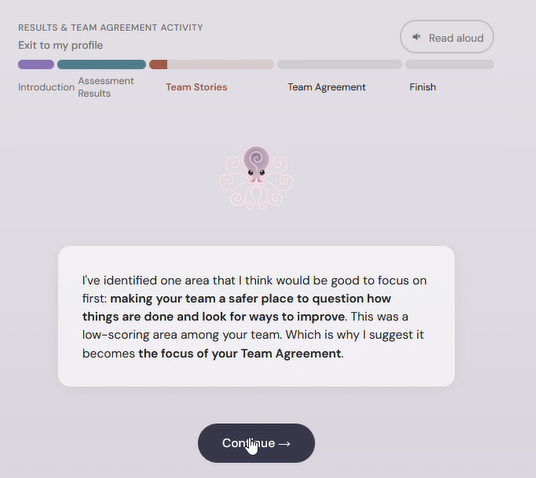
One area to improve
Focus the conversation where it can matter most.
Rather than hand the team an overwhelming list, Otis identifies one area of psychological safety to explore more deeply.
 Open full size ↗
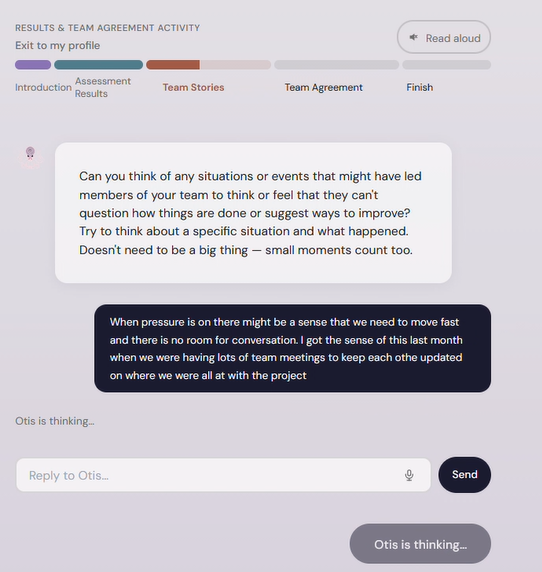
Name one opportunity
The next activity starts from a clear, bounded opportunity the whole team can understand.
 Open full size ↗
Understand the situations behind it
Members privately describe what gets in the way. Otis steers the reflection toward situations and observable behaviour, not blame.
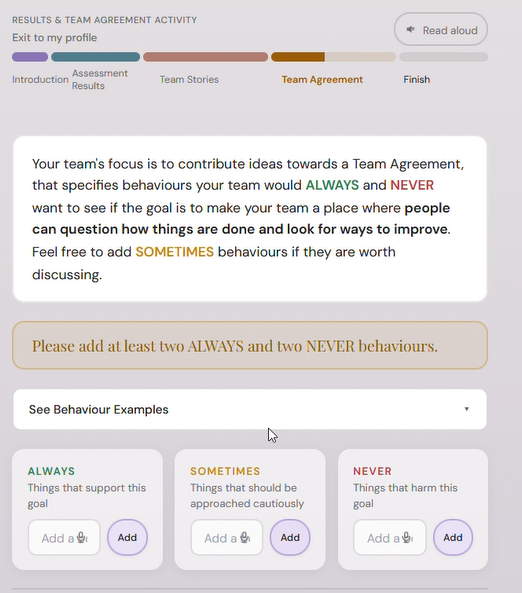
From insight to action
Translate the issue into behaviour people can see.
Every member contributes examples of what the team should ALWAYS do—and what it should NEVER do—to make the focus area safer.
 Open full size ↗
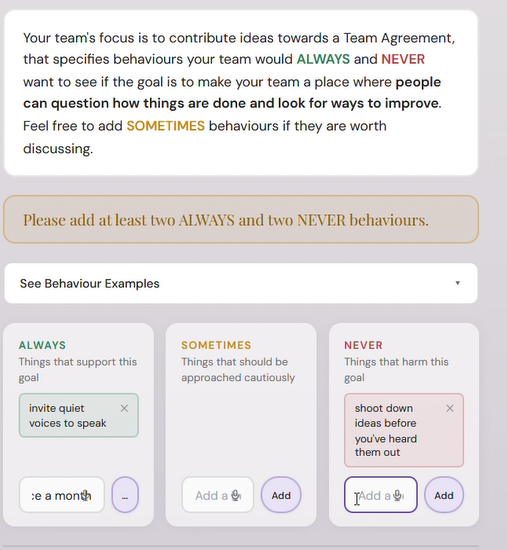
Start with a blank behaviour board
The two-column prompt makes the desired culture concrete and easy to discuss.
 Open full size ↗
Contribute specific examples
Specific actions—what someone could actually notice in a meeting—are more useful than broad values alone.
Draft and decide
Otis drafts. The team owns the final agreement.
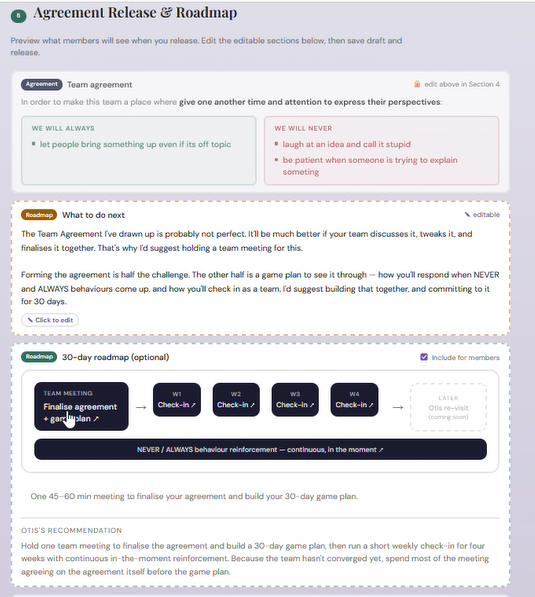
Otis brings the most useful contributions together into a preliminary Team Behaviour Agreement and a 30-day roadmap.
 Open full size ↗
Review the draft before release
The facilitator can inspect the draft and supporting materials before the team receives them.
A draft—not a decree
The agreement only works if it sounds like the team.
The team reviews the language together, changes what does not fit, and agrees how it will put the behaviours into practice. Otis organises the input; people make the commitment.
- Review the proposed ALWAYS and NEVER behaviours
- Edit language so it is clear and observable
- Choose how to respond when the agreement is tested
- Commit to a 30-day period of practice
The 30-day game plan
Give the agreement a life after the workshop.
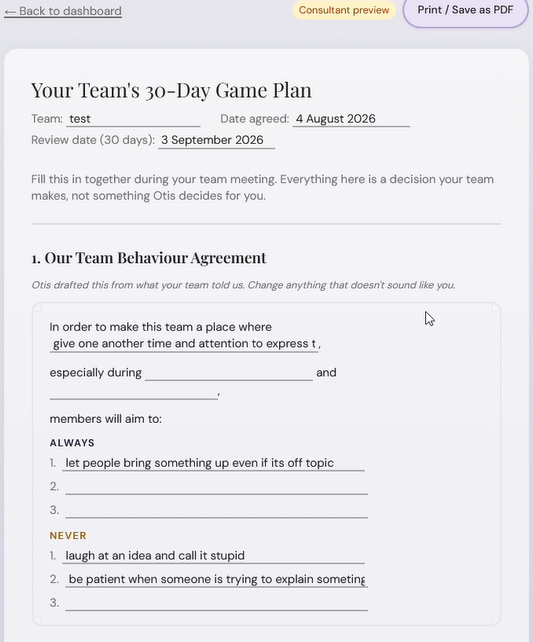
The final package is not one static report. It is a small set of practical tools that help the team notice, discuss, and reinforce its agreement.
 Open full size ↗
The Team Behaviour Agreement
A concise record of the team's focus and the ALWAYS and NEVER behaviours it has agreed to practise.
 Open full size ↗
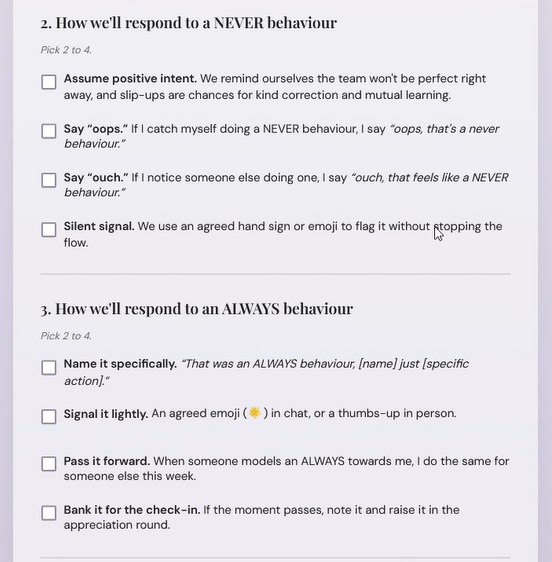
How to respond to ALWAYS and NEVER behaviours
The team chooses constructive signals for a slip—and simple ways to recognise the behaviour it wants more of.
 Open full size ↗
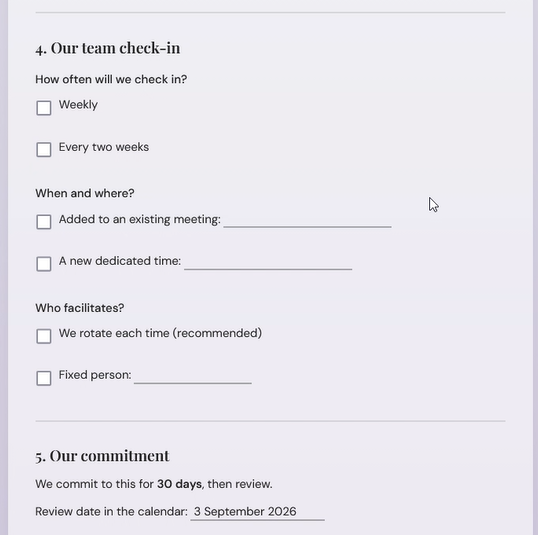
The recurring team check-in
The group decides when it will check in, where that conversation belongs, and who will facilitate it.
 Open full size ↗
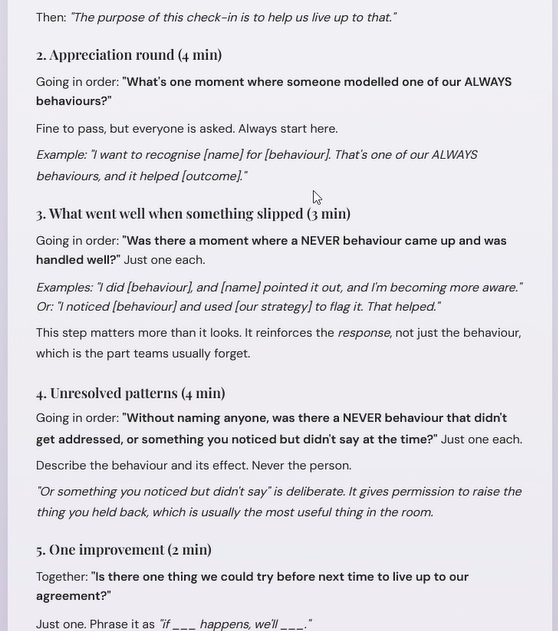
A practical meeting protocol
A repeatable agenda makes room for appreciation, honest review, unresolved patterns, and one improvement to try next.
Review and renew
After 30 days, the team looks at what changed.
The review date gives the team a natural moment to keep what is working, adjust what is not, and renew the agreement for the next stretch of work.
Privacy by design
The team sees patterns—not named answers.
Otis stores participant details separately from assessment responses. A consultant can see participation and completion, but should not see a name attached to a particular answer.
Team materials use summaries by default. Short exact excerpts can appear only after a member makes a separate affirmative choice, and those excerpts are never attached to their name.
Read the beta privacy notice →Ready to begin?